THE TWILIGHT WITH MATHIAS (29 OCTOBER 2025)
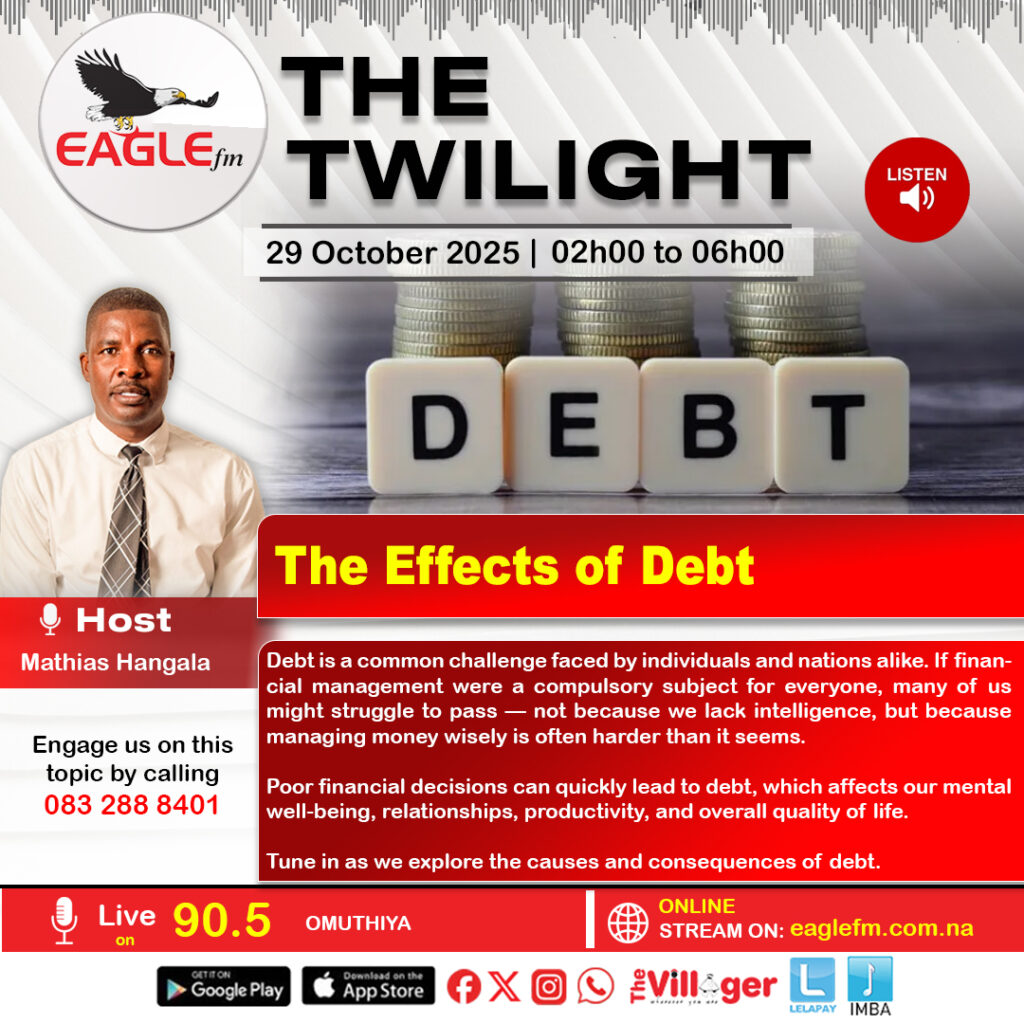
Debt is a common challenge faced by both individuals and nations. If financial management were a compulsory subject for everyone, many of us might struggle to pass, not because we lack intelligence, but because managing money wisely is often harder than it seems. Poor financial decisions can quickly lead to debt, which affects our mental well-being, relationships, productivity, and overall quality of life. The reality is that modern society almost encourages borrowing. Advertisements promise that we can “buy now and pay later,” credit cards make spending effortless, and banks compete to offer loans with tempting repayment terms. It all seems harmless at first, but beneath the surface lies a powerful force that can both empower and enslave.
It is often easy to take something on credit, but repaying it later can become difficult—especially when unforeseen events occur. A medical emergency, job loss, or even a simple budgeting mistake can derail the best-laid plans. I recall seeing a woman carrying an expensive glass table she had just bought. Unfortunately, it fell and shattered right in front of a furniture shop. I don’t know her exact situation, but if she had bought it on credit, it must have been heartbreaking to continue paying for something already broken. That image stayed with me as a reminder of how fragile financial commitments can be. When we owe money, every decision—every accident, every crisis—feels heavier because it carries a price tag.